By now, all of us should know what an iPod is. If any of you don’t know what it is, it is a device used to store music in the form of an mp3 file, with mp3 standing for MPEG (Motion Picture Experts Group Audio Layer III). The iPod device was created by Apple and was first released on November 10, 2001. Today, you have iPhones, iPads, and Mac laptops made by Apple. Virtually all of these products have the capability of downloading and obtaining mp3 files. With iTunes, which is a program on the internet designed for Apple customers to purchase and download mp3 files onto their computer or storage device, people can easily download songs for the price of a dollar a song (or 1.29) and transport them to their portable music device. People can purchase whole albums and thousands of songs with the click of a button and have it stored for all eternity on a small, portable music device. One can store music, videos, pictures, and other things on these small and convenient devices. However, because the internet is so huge, it is so easy for anyone to find the music or video they want, download it onto this type of device, and not pay for it at all.
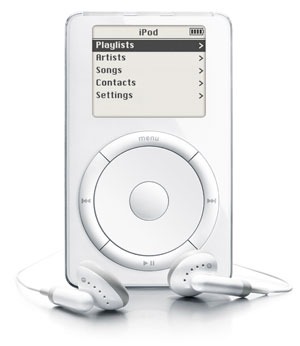
One of the original iPod versions.
From the perspective of a regular person, it is obviously a lot more convenient to download a song, video, or any other form of media onto a storage device and not have to pay it. Sites like LimeWire and Napster that were very popular when they came out were extremely convenient for the general public. One could search their database for songs, click download, and receive it on their mp3 device without ever having to worry about payment. From the perspective of a musician or maybe even a producer, this “sharing” of music on these sites is extremely unfair. These musicians and producers put out this music in the hopes of making money, but they cannot make money when they got little Jimmy buying their songs once and then distributing it over the internet for free. These musicians and producers are truly only seeing probably half of or at most, one quarter of their profits made from mp3 file sales. After these sites came out, people started picking up on these internet thefts, and it became a huge outrage. As most of you know, LimeWire was actually shut down because of copyright infringement and for allowing its users to “share” their files illegally with other users. Napster had also done this, but Metallica (one of my favorite heavy metal bands) had filed a lawsuit against them, along with other artists and some major record companies. This eventually led to its inevitable downfall.

The Legal Battle between Metallica and Napster.
As a musician and an American, I am against file sharing in general. If a file initially has a price, one must pay for it. If anything has a price, one must pay for it. If you don’t, it is theft, and it is illegal. Those that do it are stealing something that belongs to another person. The sad part is that people can still do this from other sites, whether they be well known or obscure. The internet in general is an easily accessible realm in which everyone has access to everything, which makes it extremely easy for anyone to steal anything. To even comprehend how many thefts are done on the internet would probably blow one’s mind away. But to those who do steal on the internet through file sharing sites, you should think about what you are doing. You are robbing these artists. The money that is made in the music industry today is through music production, not the actual selling of music, and these file sharing sites could be part of the reason why musicians make small amounts of money when compared to producers. These musicians put out their best work in which they have bled, sweat, and possibly even cried over. They work their asses off to try to make a living out of what they love to do, and you are robbing them of well-deserved credit and money. Fame means shit if you do not have the money to back it up in today’s world, and a lot of unknown musicians who have really great stuff still need to pay the bills. You are part of the problem, but only you can fix this. Can I reach out to everyone? Can I convince everyone to stop file sharing? I don’t know. (probably not…actually, not at all). But, I digress.
Music and file sharing is really not helpful at all to the music industry. Artists, producers, and all parties involved with the making of a song, album, video, or any other media are robbed of the credit they deserve. Sure, it does help spread the ideas around the world via the internet, but even a well-known artist needs to make money somehow. Even at a simpler level, file sharing is illegal. It is stealing. Like I said, fame really has no value. These up and coming musicians are looking to make a career out of what they do. They are looking to make a living out of what they love to do.
To lighten up the mood, here is a satiric video about Lars Ulrich and his overzealous and rather absurd rant about Napster and file sharing. WARNING: This video is explicit…but hilarious.
 TechMoshPit